

Inclusive Growth and Sustainable Development – A Complete UPSC Guide
Introduction
Inclusive Growth and Sustainable Development are two of the most important pillars of India’s development strategy. For UPSC CSE aspirants, understanding these concepts is essential for GS Paper 3, Essay, and Interview stages. This article by Vijetha IAS Academy provides a comprehensive, UPSC-focused, and SEO-optimized explanation to help aspirants gain conceptual clarity and score better in the exam.
What is Inclusive Growth? – UPSC Definition
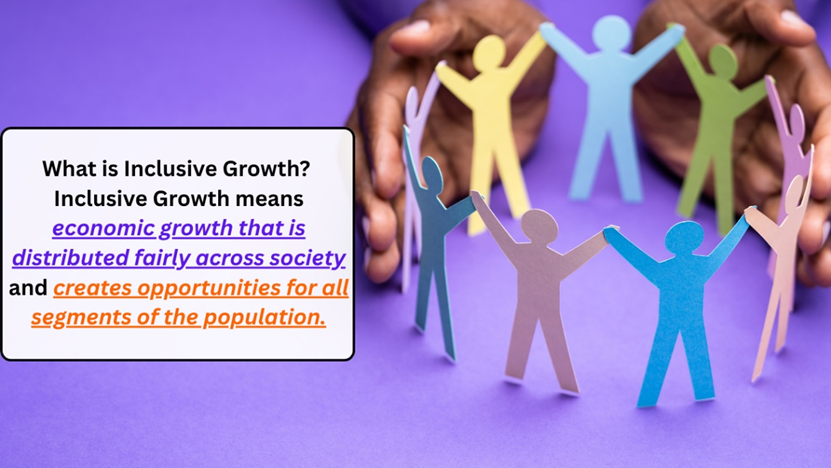
Inclusive Growth means economic growth that is distributed fairly across society and creates opportunities for all segments of the population.
Key Features of Inclusive Growth
- Broad-based growth across sectors
- Reduces poverty and inequality
- Equal access to education, healthcare, and employment
- Promotes social justice
- Growth with human development
What is Sustainable Development? – UPSC Definition
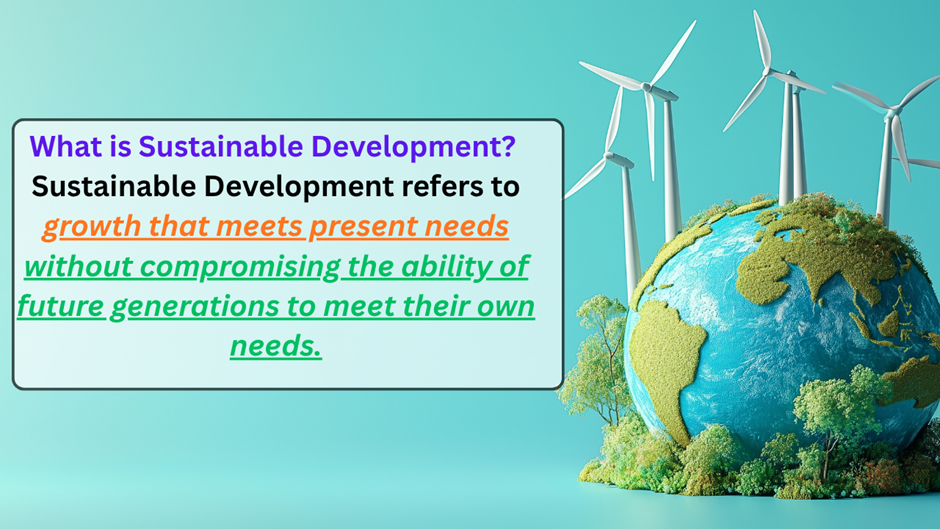
Sustainable Development refers to growth that meets present needs without compromising the ability of future generations to meet their own needs.
Key Dimensions
- Economic Sustainability
- Social Sustainability
- Environmental Sustainability
UPSC Keywords: Rio Summit, SDGs, climate change, resource conservation
Why Inclusive Growth is Important for India?
- India has regional, social & income inequalities
- High unemployment among youth
- Rural-urban divide
- Social exclusion of weaker sections (SC/ST/OBC/Minorities)
Why Sustainable Development is Critical for India?
- Rapid industrialization
- Climate change, global warming
- Water & food insecurity
- Pollution & biodiversity loss
Relevant for: GS3 (Environment), GS1 (Geography)
Government Initiatives for Inclusive Growth
Economic Inclusion
- MGNREGA
- PM Jan Dhan Yojana
- PM Mudra Yojana
- Digital India
- Startup India
Social Inclusion
- Right to Education Act
- National Health Mission
- PM Poshan
- Beti Bachao Beti Padhao
Financial Inclusion
- PMJDY
- RuPay cards
- Aadhaar-enabled DBT
Government Initiatives for Sustainable Development
Environmental Protection
- National Action Plan on Climate Change
- National Clean Air Programme
- AMRUT Mission
- Swachh Bharat Abhiyan
Renewable Energy
- National Solar Mission
- PM Kusum
- Green Hydrogen Mission
Global Commitments
- Paris Climate Agreement
- Sustainable Development Goals (SDGs)
- COP Meetings
Challenges to Inclusive Growth
- Jobless growth
- Lack of skilling
- Gender inequality
- Regional imbalance
- Digital divide
Challenges to Sustainable Development
- Overpopulation
- Fossil fuel dependence
- Deforestation
- Water scarcity
- Industrial pollution
Way Forward – UPSC Answer Writing Points
- Invest in human capital
- Promote green energy
- Strengthen social safety nets
- Foster public-private partnerships
- Promote climate-resilient agriculture
- Focus on innovation & technology
Inclusive Growth & Sustainable Development – Key General Studies Linkages
- GS Paper 1: Social issues, demographic challenges
- GS Paper 2: Welfare schemes, rights, governance
- GS Paper 3: Economy, environment, climate policies
- Essay Paper: Development challenges
- Ethics Paper: Equity, justice, intergenerational ethics
UPSC Mains Practice Questions
- Define Inclusive Growth. Why is it essential for India’s long-term development? (10 marks)
- Discuss the challenges in achieving Sustainable Development in India. Suggest solutions. (15 marks)
- “Inclusive growth and sustainable development are complementary, not contradictory.” Elaborate. (15 marks)
UPSC Prelims MCQ Practice
Q1. Inclusive Growth primarily focuses on:
A) Increasing GDP
B) Reducing fiscal deficit
C) Reducing inequalities
D) Increasing agricultural exports
Correct Answer: C
Conclusion
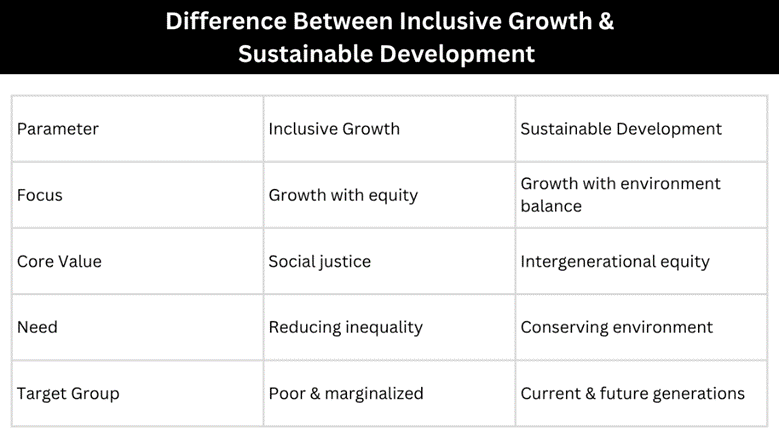
Inclusive Growth and Sustainable Development are not just academic concepts but essential pillars for India’s long-term progress. While inclusive growth ensures that every citizen—especially the marginalized—benefits from economic development, sustainable development safeguards our environment and resources for future generations. Together, they form a balanced framework that promotes equity, social justice, climate resilience, and economic stability.