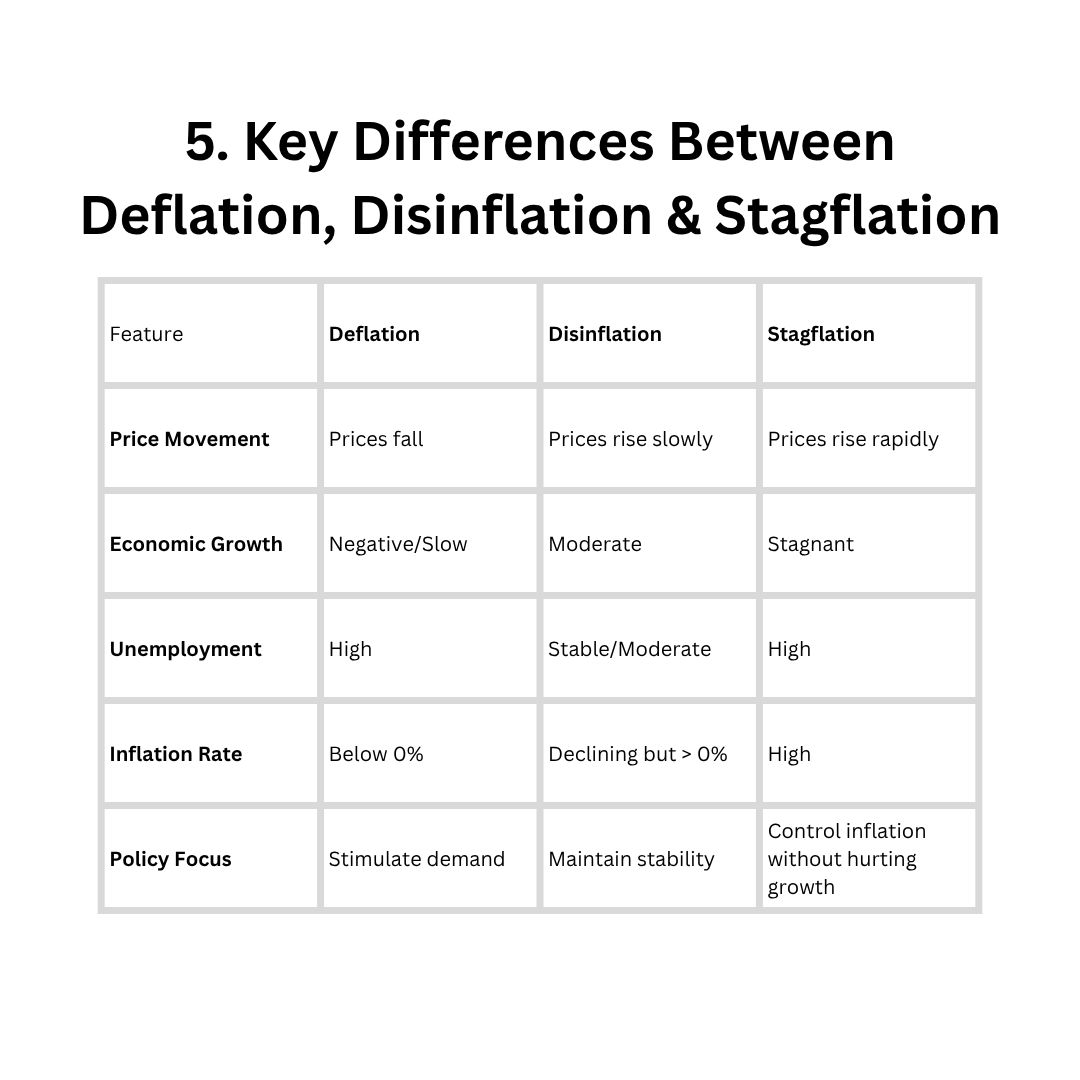
Understand the key differences between Deflation, Disinflation, and Stagflation for UPSC Economics preparation. Get complete notes, examples, and PYQ relevance for UPSC Prelims & Mains from Vijetha IAS Academy.
Introduction
Inflation and its related concepts—Deflation, Disinflation, and Stagflation—are among the most important topics in UPSC Economics for both Prelims and GS Paper 3 (Mains). A clear conceptual understanding not only helps in answering objective questions but also enriches analytical answers in Mains and Essay papers.
1. What is Inflation?
Inflation refers to the sustained rise in the general price level of goods and services in an economy over a period of time.
- Measured by: Consumer Price Index (CPI) or Wholesale Price Index (WPI) in India.
- Moderate inflation is normal and often indicates economic growth.
2. What is Deflation?
Definition:
Deflation is the sustained decrease in the general price level of goods and services in an economy. It is the opposite of inflation.
Causes of Deflation:
- Decrease in aggregate demand (AD)
- Fall in consumer spending and investment
- Excess production capacity
- Tight monetary policy or high interest rates
Effects of Deflation:
- Reduction in consumer spending as people expect prices to fall further
- Fall in profits → business closures → rise in unemployment
- Increase in real value of debt
- Sluggish economic growth
Example:
The Great Depression (1930s) in the USA is a classic case of deflation.
3. What is Disinflation?
Definition:
Disinflation means a decrease in the rate of inflation, i.e., prices are still rising but at a slower pace than before.
Example:
If inflation falls from 7% to 4%, it’s disinflation — not deflation.
Causes of Disinflation:
- Tighter monetary policy by the Central Bank
- Fiscal discipline by the government
- Improved supply-side factors
Effects of Disinflation:
- Stabilizes the economy
- Maintains purchasing power
- Prevents the overheating of the economy
4. What is Stagflation?
Definition:
Stagflation is a situation where stagnant economic growth coexists with high inflation and high unemployment.
Causes of Stagflation:
- Supply-side shocks (like oil price hikes)
- Poor monetary and fiscal policy
- Decline in productivity
Effects of Stagflation:
- Rising cost of living
- Increased unemployment
- Policy dilemma for governments — controlling inflation may worsen unemployment and vice versa
Example:
The 1970s Oil Crisis led to global stagflation when oil prices skyrocketed, slowing down economic growth.
6. Relevance in UPSC Examination
- UPSC Prelims: Conceptual MCQs based on CPI, inflation trends, and RBI policies.
- UPSC Mains (GS Paper 3): Analytical questions on inflation control, monetary policy, and growth-inflation trade-off.
- Essay Paper: “Inflation is taxation without legislation” or “Economic stability – a precondition for sustainable development.”
7. RBI’s Role in Managing Inflation
The Reserve Bank of India (RBI) uses monetary policy tools like:
- Repo Rate & Reverse Repo Rate
- Cash Reserve Ratio (CRR)
- Open Market Operations (OMO)
- Inflation Targeting Framework (4% ± 2% as per the Monetary Policy Committee (MPC))
Conclusion
A sound understanding of Deflation, Disinflation, and Stagflation is crucial for UPSC aspirants. These concepts highlight the delicate balance between price stability, growth, and employment that policymakers aim to maintain.
At Vijetha IAS Academy, we help aspirants build such conceptual clarity through our Economy Foundation Courses, Prelims Test Series, and GS Mains Enrichment Programs.