

A Five-Year Plan is a comprehensive blueprint for economic development, prepared by the Planning Commission (1950–2014), now replaced by NITI Aayog. Each plan specifies sectoral targets, resource allocation, and policy interventions for a five-year period.
Key Features of Five-Year Plans:
- Period: 5 years
- Objective-oriented planning
- Balanced growth (agriculture, industry, infrastructure, social sectors)
- Focus on employment generation and poverty alleviation
Objectives of Five-Year Plans in India
The objectives evolved according to India’s socio-economic priorities. Broadly, the main objectives include:
- Economic Growth:
Accelerate GDP growth, industrialization, and modernization of the economy. - Poverty Alleviation:
Reduce the incidence of poverty through employment generation and rural development programs. - Social Justice:
Promote education, health, and welfare of weaker sections and marginalized communities. - Self-Reliance:
Reduce dependence on imports and strengthen indigenous production. - Balanced Regional Development:
Bridge the gap between urban and rural areas and develop backward regions. - Sustainable Development (Post-8th Plan):
Environmental sustainability and optimal use of natural resources.
UPSC Prelims Fact Sheet
1. Overview
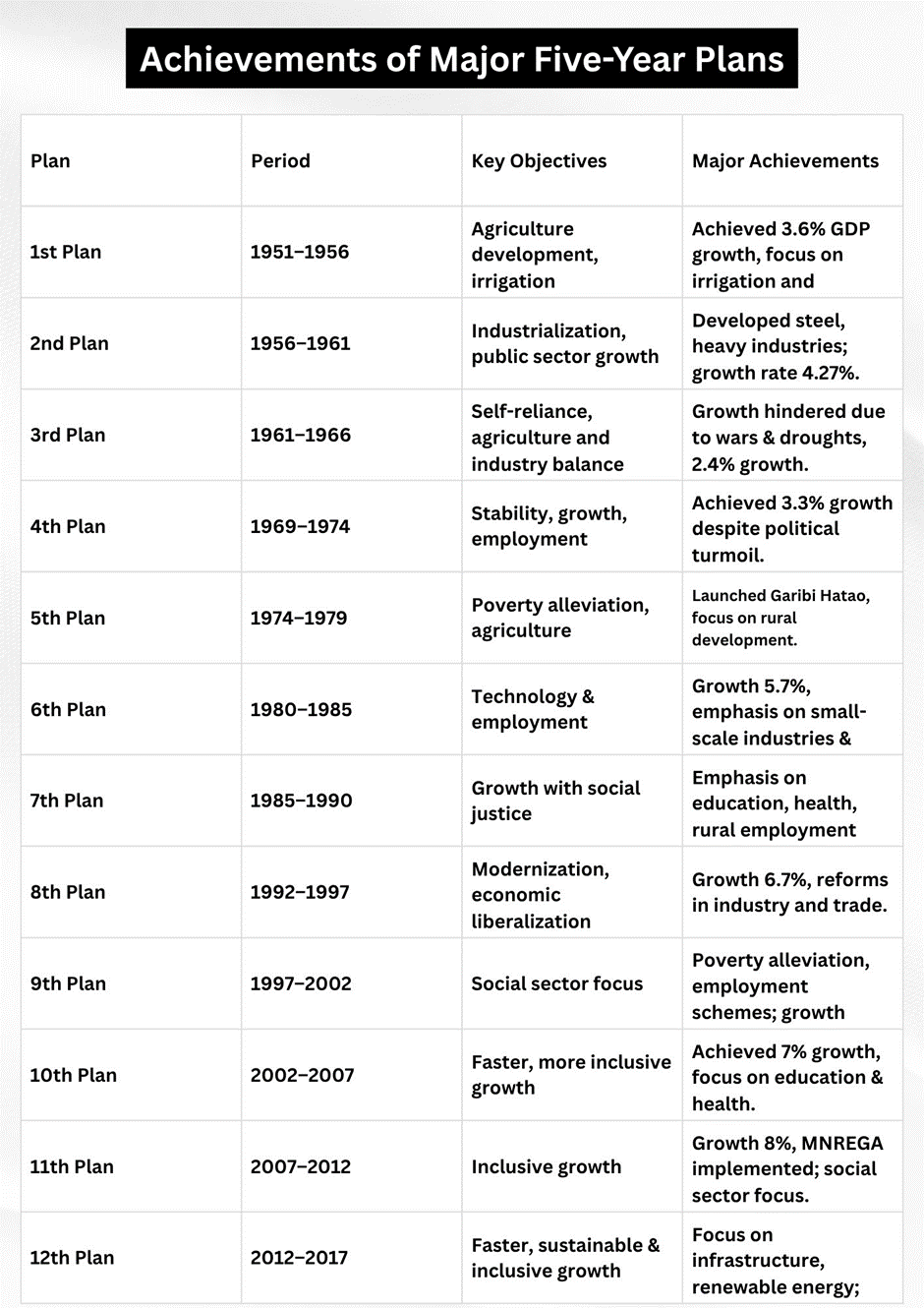
- First Plan: 1951–1956, focus on agriculture & irrigation
- Planning Body: Planning Commission (1950–2014), replaced by NITI Aayog in 2015
- Number of Plans: 12 (1951–2017); 13th plan replaced by NITI Aayog framework
2. Key Objectives of Five-Year Plans
- Accelerate economic growth
- Reduce poverty & unemployment
- Promote self-reliance
- Ensure social justice & welfare
- Achieve balanced regional development
- Emphasize sustainable development (from 8th Plan onwards)
4. Important Programs Linked to Plans
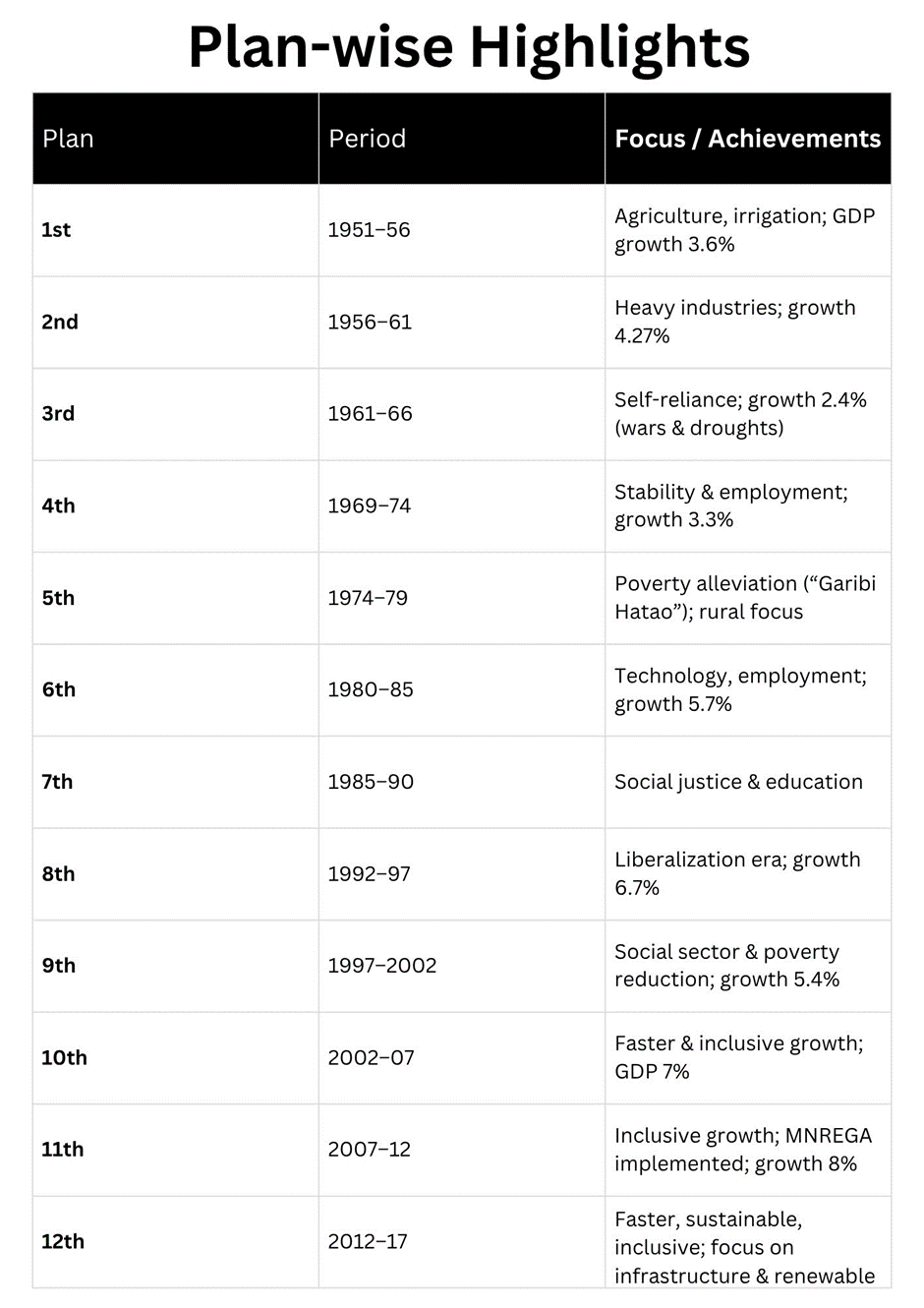
- 1st Plan: Irrigation & agriculture projects
- 5th Plan: Garibi Hatao, Rural development
- 8th Plan: Industrial & trade liberalization
- 11th Plan: MNREGA (Mahatma Gandhi National Rural Employment Guarantee Act)
5. Prelims Quick Facts
- Highest growth plan: 11th Plan (~8%)
- Lowest growth plan: 3rd Plan (~2.4%)
- Longest plan disruption: 3rd Plan (1965–66 war, drought)
- Planning Commission replaced: 2015 by NITI Aayog
- First Plan target: 2.1% increase in national income
Conclusion
India's Five-Year Plans reflect the evolution of economic priorities from agriculture to industrialization and from poverty alleviation to inclusive and sustainable growth. Understanding their objectives and achievements equips UPSC aspirants with a strong foundation in economic planning, governance, and social policy, which is indispensable for scoring in General Studies papers.